


Table of Contents
- Quick Comparison: Best Grooming Tools for Shedding Dogs
- How to Choose the Right Tool for Your Dog's Coat Type
- The Best Deshedding Brush for Double Coat Dogs
- How to Reduce Dog Shedding at Home
- How Often Should You Deshed a Dog?
- Safety and Comfort: Skin Sensitivity and Anxious Dogs
- Conclusion
- Frequently Asked Questions
Last Updated: September 13, 2026
Quick Comparison: Best Grooming Tools for Shedding Dogs
The best grooming tools for shedding dogs remove loose undercoat hair before it lands on your furniture, and the right pick depends on your dog's coat type. A de-shedding tool built for a double coat will do almost nothing for a short, smooth coat, and a fine-toothed comb can be painful on a wire-haired dog.
Here's the short answer. Grooming tools for shedding fall into four working categories:
- De-shedding brushes and rakes for double-coated breeds
- Slicker and pin brushes for medium to long coats with tangles
- Rubber and silicone brushes for short coats and bath time
- Combs for finishing, detangling, and checking your work
| Tool Type | Best For | Shedding Control | Price Range |
|---|---|---|---|
| Vacuum grooming brush attachment | Double and mixed coats | High | $12.99 |
| One-click grooming brush | Regular coat maintenance | Medium-High | $19.99 |
| Detangling comb | Tangles and finishing | Medium | $16.99 |
| Grooming glove | Short coats, bath time | Medium | $25.99 |
The tools below solve shedding at the source: the undercoat. Most guides get this wrong by recommending a single "best" brush for every dog.

How to Choose the Right Tool for Your Dog's Coat Type
Coat type decides everything, but it is not just long versus short. The variables that determine which tool works are undercoat density, topcoat texture, and hair length.
A double-coated dog has a soft, dense undercoat beneath a longer, weather-resistant topcoat, that undercoat is where shedding happens. A short, smooth coat sheds looser hair near the surface, so a rubber brush lifts it easily. A wire-haired coat has a harsh, crinkly topcoat that a fine-toothed comb will snag and break; rounded teeth or a stripping knife are correct there.
Match the Tool to the Mechanism, Not the Label
Most product pages use vague labels like "de-shedding brush." What matters is the mechanism:
- Undercoat rakes have a single or double row of short, curved metal teeth set at roughly a 90-degree angle to the handle. Tooth count matters: a rake with 8-10 teeth is for thick, dense undercoats (huskies, chows); a 16-20 tooth rake is for medium-density coats (Labradors, German shepherds). Too many teeth on a dense coat clogs instantly and glides over the surface.
- Slicker brushes use fine wire pins set into a cushioned pad. They are for detangling medium and long topcoats, not for reaching undercoat. Using a slicker on a double coat is the single most common reason owners think de-shedding tools "don't work."
- Rubber and silicone curry brushes rely on friction and static, not penetration. They are the correct tool for short, smooth coats (beagles, boxers, Dobermans) and for bath-time lathering.
- Greyhound combs and finishing combs have widely spaced teeth on one end and tightly spaced teeth on the other. They are for checking your work and catching the last loose hairs after the rake has done its job.
- De-shedding blades (the looped metal kind) reach the undercoat aggressively. They are effective on double coats but are the tool most likely to cause brush burn if used with pressure or on a dog with thin skin.
Double-Coated Breeds
Double-coated breeds like huskies, German shepherds, and golden retrievers need a tool that reaches the undercoat without scraping skin. Look for bent or angled bristles, a rake design, or a vacuum-assisted attachment that collects loose fur as you work, fine bent bristles reach deeper and remove the trapped hair causing mats and tangles.
A practical rule: if you can see the skin when you part the coat, the undercoat is thin and a slicker or comb will do. If you cannot see skin, you need a rake or a vacuum-assisted tool to get underneath.
Short, Smooth, and Wire-Haired Coats
Short and smooth coats respond best to rubber or silicone brushes, whose flexible nubs grab loose fur and dander without scratching. Wire-haired dogs need a comb with rounded teeth, since stiff metal blades can irritate sensitive skin. Match the tool to the coat texture, not the dog's size.
A Quick Diagnostic Before You Buy
Run this check before buying a tool:
- Part the coat down the spine. Can you see skin? If yes, you have a single coat or a thin double coat, start with a rubber curry or slicker.
- Pinch a small section of hair between thumb and forefinger and pull gently. If a tuft comes away easily, you are in a shedding cycle and a rake will pay off. If nothing releases, you are between cycles and a comb is enough.
- Run your hand against the grain. If you feel a dense, woolly layer under the topcoat, you need an undercoat rake. If the coat feels uniform, you do not.
Tools That Do Not Work on Shedding Dogs
A few popular tools are mismatched to the job:
- Bristle brushes (the kind that look like human hairbrushes) only reach the topcoat. They make the coat shiny and do nothing for undercoat shedding.
- Pin brushes with plastic-tipped pins are for finishing show coats, not for removing undercoat. The tips bend and the pins never reach the skin.
- Flea combs are too fine for anything but short, single coats and will snap on a double coat.
Keep these for finishing, but do not expect them to reduce shedding on their own.
The Best Deshedding Brush for Double Coat Dogs
The best de-shedding brush for a double coat reaches the undercoat and collects loose fur instead of scattering it. A brush that only smooths the topcoat looks nice for an hour, then the shedding starts again.
Our top pick is the Pet Vacuum Grooming Brush Attachment at $12.99. The vacuum-assisted design collects hair during grooming, so you're not chasing tumbleweeds afterward. Fine bent bristles lift tangles, knots, and trapped dander without scratching your pet's skin, and it fits dogs and cats of different sizes and coat types.
For everyday maintenance between deeper sessions, the One-Click Pet Grooming Brush at $19.99 is easier to reach for. The one-click hair removal mechanism releases collected fur instantly, so you're not picking hair out of the bristles by hand.

How to Reduce Dog Shedding at Home
Reducing shedding at home comes down to routine, not force. A dog brushed two or three times a week sheds noticeably less on your floors than one brushed once a month.
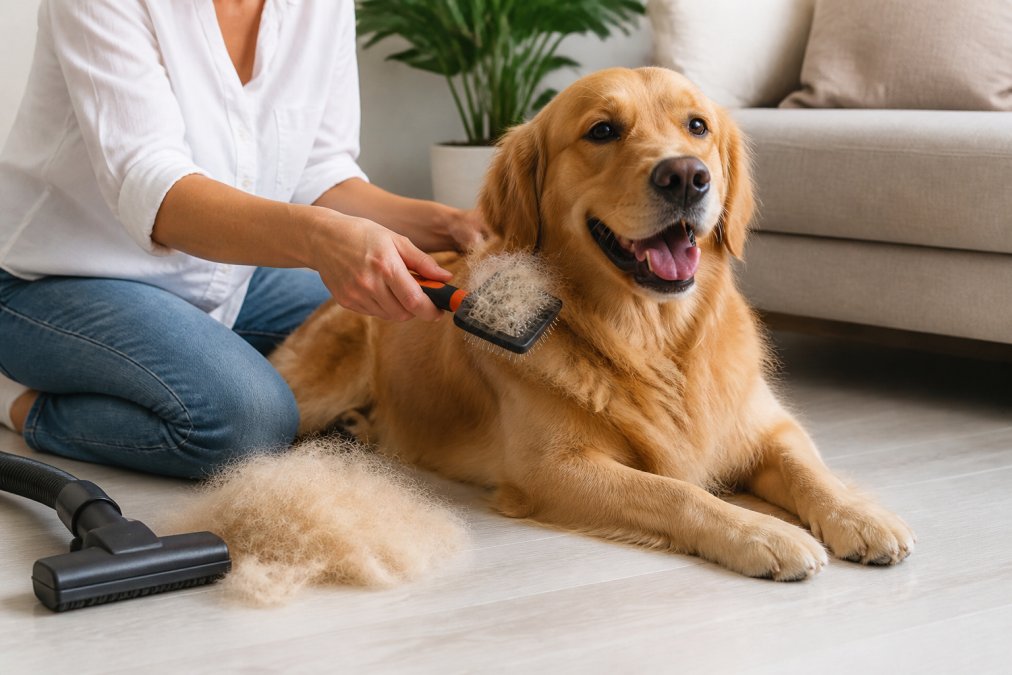
Here's a practical sequence that works for most coats:
- Brush your dog outdoors or on a washable mat
- Start at the hindquarters and work forward
- Use short strokes in the direction of hair growth
- Clear the tool every few strokes
- Finish with a comb to catch missed tangles
- Vacuum or sweep the area immediately
Bath time helps too. A Silicone Pet Bath & Massage Brush at $16.99 has a built-in shampoo dispenser and soft TPR bristles that lift dirt, loose hair, and surface debris while you lather, with a curved grip for a wet, wriggling dog. For dogs who tolerate baths poorly, the 2-in-1 Pet Bathing & Grooming Glove at $25.99 does double duty: the TPR side massages and brushes, while the chenille microfiber side absorbs moisture and wipes away dirt.

How Often Should You Deshed a Dog?
Most double-coated dogs need de-shedding two to three times per week during heavy shedding seasons and once or twice a week the rest of the year (vcahospitals.com). Short-coated dogs can go a week or more between sessions.
When days get longer in spring, many double-coated breeds blow their winter undercoat in weeks, that's when daily brushing pays off. In fall, the coat thickens and shedding picks up again, usually less dramatically.
A quick frequency guide:
| Coat Type | Normal Season | Heavy Shedding Season |
|---|---|---|
| Double coat | 1-2x per week | Daily |
| Short, smooth | Every 7-10 days | 2-3x per week |
| Wire-haired | 1x per week | 2x per week |
| Long, silky | 3-4x per week | Daily |
Seasonal Shedding vs. Health-Related Hair Loss
This distinction matters more than any frequency chart. Normal shedding is cyclical, symmetrical, and coat-wide. Health-related hair loss is persistent, often patchy, and usually accompanied by other signs. Miss the difference and you can brush daily for months without addressing the actual problem.
Normal seasonal shedding looks like this:
- Starts within a few weeks of a daylight shift (spring or fall)
- Affects the whole body evenly
- Comes out in tufts when you rake, but the skin underneath looks normal, no redness, no flakes, no odor
- Resolves on its own within 2-4 weeks of consistent grooming
Health-related hair loss tends to look like this:
- Patchy, asymmetrical, or concentrated on the flanks, neck, or tail
- Bald spots that do not regrow after a shedding cycle
- Accompanied by itching, chewing, licking, scabbing, or a dull, brittle coat
- Sudden onset unrelated to season
- Weight change, lethargy, or increased thirst alongside the hair loss
Common non-seasonal causes a veterinarian will consider include thyroid imbalance, Cushing's disease, allergies, parasites such as fleas or mange, fungal infections like ringworm, and nutritional deficiencies (Hair Loss (Alopecia) in Dogs - Dog Owners). None are solved by a better brush.
When to Stop Grooming and Call Your Vet
Put the tool down and make an appointment if you see any of the following:
- Bald patches that persist for more than two weeks
- Red, inflamed, or broken skin anywhere on the body
- Foul odor coming from the coat or skin
- Excessive scratching, biting, or licking at one spot
- Sudden, dramatic shedding in a dog that was previously normal
- Hair loss around the eyes, muzzle, or ears, this pattern is rarely seasonal
A veterinarian can run a skin scrape, blood panel, or thyroid test for a definitive answer (avma.org). Home grooming is for maintenance, not diagnosis.
Adjusting Frequency for Age, Health, and Climate
A few factors shift the schedule:
- Senior dogs often have thinner coats and less tolerance for long sessions. Shorten sessions and increase frequency.
- Dogs on medication (especially steroids) may shed more or less than their breed norm. Ask your vet what to expect.
- Indoor-only dogs in climate-controlled homes may shed more evenly year-round because they never get a strong seasonal light cue. For these dogs, a consistent twice-weekly schedule beats a seasonal one.
- Dogs recovering from illness or surgery should not be de-shedded aggressively until cleared by a vet.
Safety and Comfort: Skin Sensitivity and Anxious Dogs
Sensitive skin and grooming anxiety are the two reasons at-home grooming fails, and both have practical fixes. Choose tools with rounded, flexible bristles, and build trust before you build a routine.
For dogs with sensitive skin, silicone and TPR tools are the safer starting point. The Pet Dog Silicone Bath Massage Gloves Brush at $17.99 won't pull on hair and turns grooming into something closer to a massage.
For anxious dogs, desensitization beats restraint every time. Try this sequence:
- Leave the tool on the floor near your dog's bed for two days
- Touch the tool to your dog's shoulder for one second, then treat
- Brush one stroke, then treat, and stop
- Add one stroke per session over a week
- Brush a full side only when your dog stays relaxed
Conclusion
Shedding is a maintenance problem, not a mystery: the right tool plus a consistent routine solves most of it. Match the tool to the coat, brush in the direction of growth, and never force a session on a stressed dog.
Pure-N-Equal carries a full range of grooming essentials for exactly this job, from the vacuum-assisted de-shedding attachment to silicone bath brushes and gloves that keep sensitive dogs comfortable. Every tool is chosen for daily use, not just the occasional deep clean. Choose Pure-N-Equal and give your dog a coat that stays healthy, comfortable, and manageable all year.
Frequently Asked Questions
What is the most effective tool for shedding dog hair?
The most effective tool depends on coat type, but a deshedding brush or grooming rake is best for double-coated breeds. For short-haired dogs, a rubber curry or grooming glove works well. For long coats prone to tangles, a slicker brush followed by a metal comb removes the most loose fur. Using the right tool for your dog's coat texture matters more than any single product.
Is it safe to use a deshedding tool on a dog every day?
Daily use of a deshedding tool is generally safe for most dogs, but it depends on the tool and coat type. A soft brush or grooming glove can be used daily for coat maintenance. A deshedding blade or rake with metal teeth should be used two to three times per week to avoid irritating the skin. Watch for redness, dander, or sensitivity, and reduce frequency if you notice any discomfort.
What is the difference between a slicker brush and a deshedding rake?
A slicker brush has fine wire pins that remove surface debris, tangles, and loose topcoat hair. A deshedding rake has longer, wider-spaced teeth that reach into the undercoat to remove loose fur before it mats. For double-coated dogs, start with a slicker brush to smooth the topcoat, then follow with a rake to pull dead undercoat. Using both together is more effective than either alone.
How do I choose the right brush for my dog's coat type?
Match the tool to the coat. Double-coated breeds need a rake or deshedding brush to reach the undercoat. Short, smooth coats do well with rubber curry brushes or grooming gloves. Long, silky coats need a slicker brush and metal comb to prevent tangles. Wire-haired dogs benefit from a slicker brush and stripping comb. When in doubt, start with a versatile tool like a grooming glove and adjust based on results.
What do groomers use to stop shedding?
Groomers use a combination of tools and techniques rather than a single product. They typically start with a rubber curry or grooming glove to loosen fur, follow with a slicker brush for the topcoat, and finish with a deshedding rake or blade for the undercoat. A high-velocity dryer after bathing also blows out loose fur. Regular grooming every four to six weeks keeps shedding manageable between visits.