


Table of Contents
- What You'll Need to Clean Pet Mats Properly
- Step-by-Step: How to Clean Pet Mats Properly
- Best Cleaning Solutions for Rubber Pet Mats
- How Often to Wash Dog Food Mats
- How to Dry Washable Pet Mats Without Mildew
- Material-Specific Cleaning Tips for Pet Mats
- Common Mistakes to Avoid When Cleaning Pet Mats
- Frequently Asked Questions
Last Updated: September 25, 2026
What You'll Need to Clean Pet Mats Properly
Cleaning pet mats properly starts with the right supplies, not the strongest chemicals. A mild soap, warm water, and a soft brush handle most messes without damaging the mat. At Pure-N-Equal, pet owners who gather their tools first finish faster.
Here's your supply list:
- Vacuum with a brush attachment
- Mild dish soap or pet-safe detergent
- Warm water
- White vinegar
- Baking soda
- Soft-bristle brush
- Microfiber cloths
- Rubber gloves
Step-by-Step: How to Clean Pet Mats Properly
Follow these steps in order, skipping ahead means scrubbing twice and still leaving odor behind.
Step 1: Remove Debris and Vacuum
Shake the mat outside to knock loose kibble and hair free, then vacuum both sides with a brush attachment. Dry debris turns into muddy paste once water hits it, working deeper into the fibers.
Step 2: Identify the Stain Before You Treat It
Not all stains respond to the same cleaner. Treating a grease stain like a urine stain (or vice versa) can set the mess permanently.
- Urine and vomit: Protein-based. Blot up as much liquid as possible, then treat with an enzyme cleaner, which breaks down the uric acid crystals that cause lingering odor. Baking soda and vinegar only mask the smell.
- Feces and food: Scoop or scrape off solids first, then treat with a mild soap solution and blot.
- Grease and oil (from kibble or treats): Apply a drop of grease-cutting dish soap directly to the spot, work it in with your fingers, and let it sit for 5 minutes before rinsing.
- Tannin stains (from dirt, tea-colored drool, or certain foods): These set with heat. Use cool water and a vinegar solution, never hot water, or the stain will bond to the fabric.
- Blood: Use cold water only. Warm water coagulates blood proteins and locks the stain in.
Step 3: Pre-Treat Stains and Odors
Blot fresh stains with a clean cloth before they set, press down, don't rub, or you'll spread the stain deeper.
Step 4: Wash by Hand or Machine
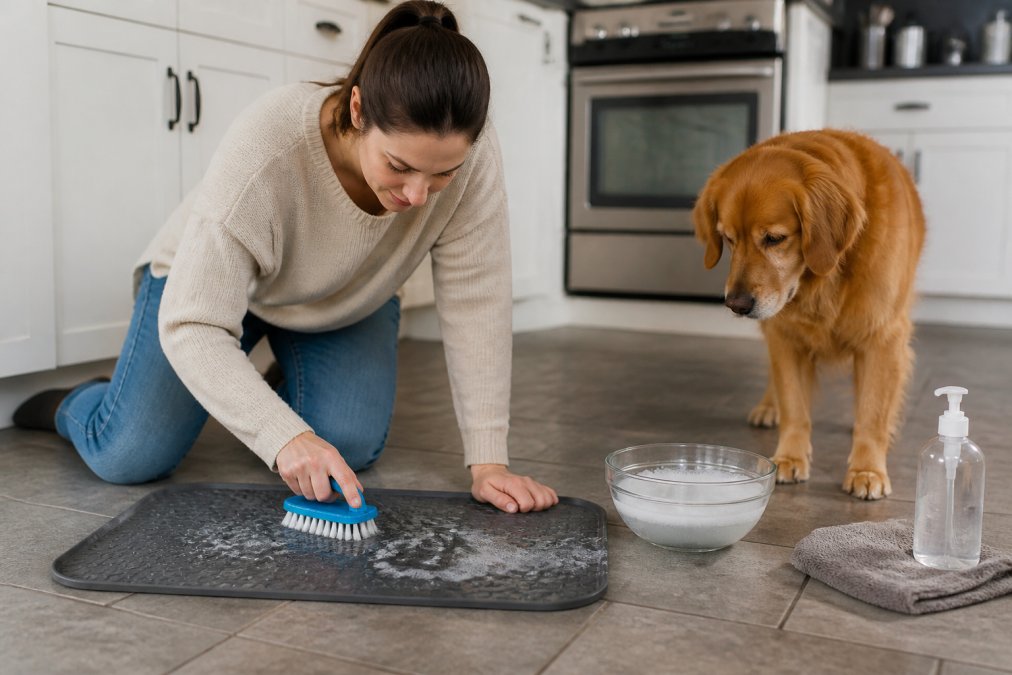
Hand washing suits rubber-backed mats and anything with a delicate surface. Fill a tub with warm water and a few drops of mild soap, a teaspoon per gallon is plenty. Scrub gently with a soft brush, then rinse until the water runs clear; soap residue attracts dirt and irritates paws.
Step 5: Dry Completely
Mildew and lingering odor both come down to moisture. Lay the mat flat on a rack or hang it so air reaches both sides, and flip it halfway through; a fan cuts drying time significantly. If it still smells musty, repeat the enzyme or vinegar treatment and dry again.
Troubleshooting Common Problems
- Mat still smells after washing: The odor source is likely in the backing or padding, not the surface. Soak in an enzyme solution, then air dry in direct airflow.
- Mat won't lay flat after drying: Rubber-backed mats curl when dried with heat. Lay them flat under a heavy towel for a day, or re-wet and air dry flat.
- Stiff or scratchy microfiber: Detergent buildup. Run a rinse cycle with white vinegar and no soap, then air dry.
- Stain came back after drying: Heat set it. Re-treat with cool water and the appropriate cleaner, and avoid the dryer.
Best Cleaning Solutions for Rubber Pet Mats
The best cleaner for rubber pet mats is mild soap and warm water, rubber backing breaks down with harsh chemicals. A vinegar solution handles odors, and baking soda lifts stains without scratching.
| Solution | Best For | How to Use |
|---|---|---|
| Mild soap + warm water | Everyday grime | Scrub, then rinse well |
| Vinegar solution (1:2 ratio) | Odor neutralization | Spray, wait 5 minutes, blot |
| Baking soda paste | Dried stains | Apply, sit 15 minutes, wipe |
| Pet-safe detergent | Machine washable mats | Gentle cycle, cold water |
How Often to Wash Dog Food Mats
Wash dog food mats at least once a week, and more often if your dog is a messy eater. Daily wipe-downs handle small spills between washes. Waiting until the mat looks dirty is a mistake, bacteria build up long before stains show.
- Wipe the mat daily with a damp cloth
- Deep clean once a week
- Wash immediately after any vomit, diarrhea, or raw food contact
- Replace mats that stay damp or develop a persistent smell
How to Dry Washable Pet Mats Without Mildew
Air drying is the safest way to dry washable pet mats and prevent mildew. Skip the dryer unless the care tag allows low heat, since heat can warp rubber backing and shrink fabric.
Material-Specific Cleaning Tips for Pet Mats
Most guides hand you one method and hope it fits. A rubber-backed feeding mat, a memory foam bed topper, and a microfiber crate pad fail in completely different ways when they meet water, heat, or detergent. Match the method to the material and the mat lasts years.

Rubber and Rubber-Backed Mats
Rubber backing is the most common failure point, and heat kills it, a dryer cycle or hot water accelerates cracking, curling, and crumbly edges.
- Wash by hand in warm water, not hot. If you must machine wash, use cold water on gentle.
- Use a few drops of mild dish soap or a pet-safe detergent. Skip anything with bleach, ammonia, or citrus oil degreasers, which degrade rubber.
- Scrub with a soft-bristle brush. A stiff brush or scouring pad scratches the rubber and creates grooves where bacteria collect.
- Rinse until the water runs clear. Soap residue on rubber stays tacky and attracts hair.
- Air dry flat, rubber side up, away from direct sun. UV exposure dries out the rubber over time.
Memory Foam Mats and Bed Toppers
Memory foam is an open-cell material: once water soaks in, it can take days to dry and develop a musty smell that never fully leaves. Treat it like upholstery, not laundry.
- Spot clean only. Never submerge or soak a memory foam mat.
- Mix a small amount of mild soap with warm water, dip a microfiber cloth, and wring it out until it's barely damp.
- Blot the soiled area. Don't rub, rubbing pushes moisture deeper into the foam.
- Rinse by blotting with a clean damp cloth, then blot again with a dry towel.
- Sprinkle baking soda over the damp spot, let it sit for several hours or overnight, then vacuum. The soda pulls residual moisture and odor.
- Air dry in a well-ventilated room with a fan. Never put memory foam in a dryer, heat breaks down the foam cells permanently.
Microfiber Mats and Pads
Microfiber is the most washable option but the most prone to trapping odor when detergent builds up. The fix is less soap, not more.
- Machine wash on gentle with cold water. Use about half the detergent you'd normally use, microfiber holds onto residue.
- Skip fabric softener and dryer sheets entirely. They coat the fibers and destroy absorbency.
- Add a half cup of white vinegar to the rinse cycle to strip residual detergent and neutralize odor.
- Tumble dry on low, or air dry. High heat can melt the fine fibers and leave the mat scratchy.
- Wash microfiber mats separately from towels and clothing. Lint from other fabrics clings to microfiber and is hard to remove.
Silicone and TPR Mats
Silicone and thermoplastic rubber feeding mats are the easiest to clean because they don't absorb anything. They also handle stronger cleaners than rubber-backed fabric mats.
- Wipe down daily with warm soapy water or a 1:1 vinegar-and-water spray.
- For greasy residue, use a drop of Dawn or a similar grease-cutting dish soap, then rinse thoroughly.
- Silicone is dishwasher safe on the top rack if the mat fits and the manufacturer allows it. Check before you commit, some mats warp on the bottom rack.
- Skip abrasive sponges. They leave micro-scratches that dull the finish and trap grime.
Vegan Leather and Coated Fabric Mats
These are wipe-clean surfaces, not washable ones. Water is fine; soaking is not.
- Wipe with a damp microfiber cloth and a drop of mild soap.
- Dry immediately with a clean towel. Standing water can seep through seams and lift the coating.
- Avoid alcohol-based cleaners, which dry out and crack the surface over time.
Wool and Natural Fiber Mats
Wool is naturally odor-resistant but shrinks and felts with heat and agitation.
- Spot clean with cool water and a wool-safe detergent, or a diluted vinegar solution.
- Never machine wash or machine dry unless the tag explicitly says it's safe.
- Lay flat to dry, reshaping the mat by hand while it's still damp.
Quick Reference
| Material | Wash Method | Water Temp | Dry Method | Avoid |
|---|---|---|---|---|
| Rubber-backed | Hand wash preferred | Warm | Air dry flat | Dryer, hot water, bleach |
| Memory foam | Spot clean only | Warm, barely damp | Air dry with fan | Soaking, dryer, heat |
| Microfiber | Machine, gentle | Cold | Low heat or air | Fabric softener, high heat |
| Silicone / TPR | Wipe or dishwasher | Warm | Air dry or towel | Abrasive sponges |
| Vegan leather | Wipe only | Warm, damp | Towel dry | Soaking, alcohol cleaners |
| Wool | Spot clean | Cool | Lay flat | Machine wash, heat |
If you're not sure what your mat is made of, check the care tag first. When there's no tag, assume the most delicate option, hand wash with mild soap and air dry, and you won't go wrong.
Common Mistakes to Avoid When Cleaning Pet Mats
The biggest mistake is using too much soap. Excess detergent traps dirt, irritates paws, and leaves a sticky film that attracts more mess. A few drops go a long way.
Other mistakes to skip:
- Putting rubber-backed mats in the dryer
- Using bleach or ammonia near pets
- Skipping the vacuum step before washing
- Letting mats stay damp after cleaning
- Washing at high heat and shrinking the mat
Frequently Asked Questions
Can you use dish soap to clean rubber pet mats?
Yes, a small amount of mild dish soap mixed with warm water works well for rubber pet mats. It cuts through grease and food residue without damaging the rubber. Rinse thoroughly with clean water to remove all soap, then air dry completely. Avoid harsh chemicals or abrasive scrubbers that can break down the rubber over time.
Is it safe to put pet mats in the washing machine?
Many washable pet mats, like the Reusable Waterproof Pet Training Mat, are machine washable. Use a gentle cycle with cold or warm water and a pet-safe detergent. Avoid fabric softener and bleach. For rubber-backed mats, check the care label first, as the backing can crack in high heat. Air drying is always the safest option.
How do you remove stubborn odors from pet mats?
For lingering odors, sprinkle baking soda over the dry mat and let it sit for 15 minutes before vacuuming. Then wash with a vinegar solution (1 part white vinegar to 3 parts water) or an enzyme cleaner. Vinegar neutralizes odors without harsh chemicals. For rubber mats, a diluted vinegar spray followed by a thorough rinse works well.
How often should you deep clean your pet's feeding mat?
Deep clean feeding mats at least once a week, or more often if your pet is a messy eater or drinker. Wipe the mat daily with a damp cloth to remove crumbs and spills. For washable mats, a full machine or hand wash every 7 to 10 days helps prevent bacteria and mildew buildup.
Cleaning pet mats properly comes down to consistency, not effort. A weekly routine with the right supplies protects your floors, your pet's health, and the mat itself. Pure-N-Equal carries absorbent, waterproof mats built for daily use, with non-slip backing, stain-resistant surfaces, and machine-washable designs that make cleanup simple. Choose Pure-N-Equal for pet essentials that keep your home fresh and your companion comfortable.