


Table of Contents
- Start With Your Cat's Body Language, Not the Brush
- Signs of Cat Stress During Grooming You Should Never Ignore
- Best Grooming Tools for Anxious Cats (and What to Skip)
- How to Desensitize a Cat to Grooming in Short Daily Sessions
- Step-by-Step: How to Groom an Anxious Cat at Home
- Troubleshooting Trigger Areas: Paws, Belly, and Tail
- Calming Aids, Matting, and When to Call a Professional
- Frequently Asked Questions
Last Updated: September 21, 2026
Start With Your Cat's Body Language, Not the Brush
Learning how to groom anxious cat at home starts with reading your cat, not reaching for a tool. Cats signal stress long before they swipe or hiss, and catching those early signs is what keeps grooming calm.
Watch for these early stress signals:
- Tail flicking or a fast-twitch tail tip
- Ear flattening or ears pinned sideways
- Dilated pupils, even in soft light
- Skin rippling along the back
- A tucked tail or crouched posture
- Sudden stillness after active resistance
Signs of Cat Stress During Grooming You Should Never Ignore
Ignoring stress signals is the fastest way to turn a nervous cat into a cat that hides when you pick up a brush. Feline behavior experts group these signals into two tiers: early warnings and shutdown signals.
Best Grooming Tools for Anxious Cats (and What to Skip)
The best grooming tools for anxious cats are quiet, gentle, and small. Loud clippers, metal combs with sharp teeth, and anything that vibrates hard will spike stress before you touch fur.
Skip these until your cat is calm:
- Electric clippers with loud motors
- Metal shedding rakes with stiff tines
- Nail grinders that vibrate
- Any tool that snags on tangles
| Tool Type | Best For | Skip If |
|---|---|---|
| Silicone grooming glove | Short-haired cats, first sessions | Coat is badly matted |
| Soft bristle brush | Sensitive skin, daily touch work | Cat flinches at contact |
| Detangling comb | Long-haired coats, light knots | Tangles are tight to skin |
| One-click brush | Loose fur removal | Cat fears clicking sounds |
How to Desensitize a Cat to Grooming in Short Daily Sessions
Desensitization means teaching your cat that grooming tools predict treats, not stress. Counterconditioning is the other half: replacing the fear response with a positive one. You need both, and you need a plan that survives a bad day.

A practical plan looks like this:
- Days 1-3: Leave the tool on the floor near your cat's resting spot. Drop a treat nearby. No touching.
- Days 4-6: Touch the tool to your cat's shoulder for one second. Treat. Stop.
- Days 7-10: One gentle stroke along the back. Treat. Stop after two strokes.
- Days 11-14: Two to three strokes per session, twice daily.
- Week 3 onward: Add a second body area, one at a time.
The rule that makes the plan work: one variable at a time
Change only one thing per session, the tool, the body area, or the duration. If you add a new tool and a new body area on the same day, you can't tell which one caused the reaction.
What to do when your cat stalls
Stalling is normal. Regression is normal. The fix is almost always to go back one step, not forward.
- Cat won't take treats during the session. The session is already too stressful. End it, and drop the difficulty back one full step. A cat that refuses food is over threshold, and no learning happens over threshold.
- Cat was fine yesterday, hides today. Something in the environment changed, a new smell, a loud noise, a different time of day. Reset to the last step that worked and repeat it for three sessions before advancing.
- Cat tolerates the tool but not on the body. Stay on the floor-touch step longer. Some cats need a full week at step one.
- Cat freezes instead of fleeing. Freezing is a shutdown signal, not cooperation. Stop immediately and shorten the next session by half.
A realistic timeline for highly fearful cats
For a cat that already hides at the sight of a brush, expect four to eight weeks to reach a full back-and-sides groom, and longer for paws and belly. That is not failure, it is the normal pace for a cat with a history of bad grooming experiences.
Layering in pheromones and calming aids
Calming aids support the training, they do not replace it. Two common options:
- Pheromone diffusers and sprays. Plug a diffuser into the room where you groom at least 24 hours before a session so the pheromone has time to build up. A spray version can be applied to a towel or your hands 15 minutes before you start. Never spray directly on the cat.
- Calming chews or supplements. These typically need to be given daily for one to two weeks before you see an effect, so start them before you begin desensitization, not the day of a session.
Step-by-Step: How to Groom an Anxious Cat at Home
Here is the sequence that works when you groom anxious cat. Total time: five to ten minutes once your cat is trained.
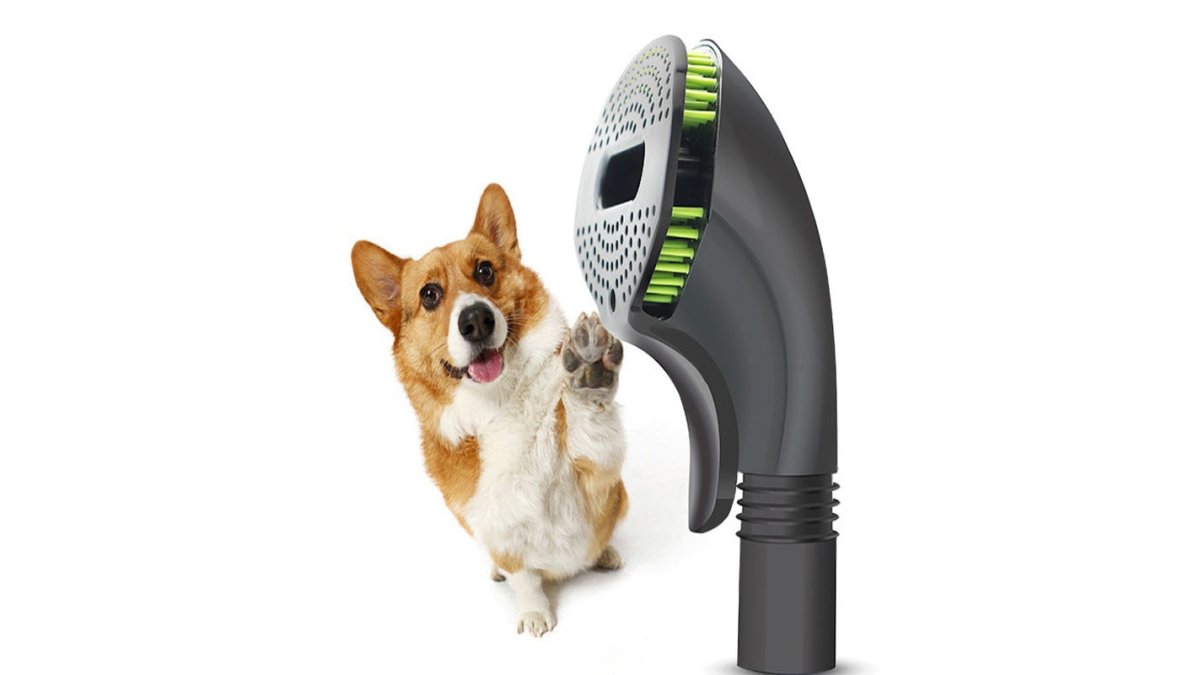
What you'll need:
- Soft brush or silicone grooming glove
- Detangling comb for long-haired cats
- High-value treats
- A towel or mat for your lap
Troubleshooting Trigger Areas: Paws, Belly, and Tail
Paws, belly, and tail are trigger zones because they are the most vulnerable parts of a cat's body, and because those areas are usually where a past grooming session went wrong. A cat that swats at a paw touch is not being stubborn, it is guarding a spot that has been grabbed, clipped, or held before. The fix is to rebuild trust in that specific area, one touch at a time, separate from any actual grooming.
Paws
Paws are the hardest area for most cats because nail trims require holding the paw still, which is the opposite of what a nervous cat wants.
- Touch the top of the paw for one second. Treat. Release. Repeat three times per session.
- Cup the paw without lifting it. Treat. Release.
- Lift the paw a half-inch and set it down. Treat. Release.
- Hold the paw for three seconds. Treat. Release.
- Press a toe pad gently to extend one claw. Treat. Release. Do not cut yet.
- Clip one nail, then treat and stop for the day. One nail per session is a win for a fearful cat.
Belly
The belly is guarded because it covers vital organs. Do not reach for it. Wait for your cat to offer it.
- Start with the chest, not the belly. Stroke the chest and front legs while your cat is standing or sitting. Treat.
- Only work the belly when your cat rolls over on its own. A cat that rolls over is choosing to expose the belly. A cat that is flipped onto its back is being restrained, and that is a different, and much more stressful, situation.
- Build in one-inch increments. Stroke one inch lower each session, always with the grain of the fur, always ending with a treat before the cat tenses.
- Never brush a matted belly at home. Belly mats sit against thin skin and are the most common reason a home groom ends in a bite. If the belly is matted, that is a professional or veterinary job.
Tail
The tail base is packed with nerve endings and is a common overstimulation trigger. Many cats that seem fine during a back brush will suddenly bite when the brush reaches the tail base.
- Brush only the top third of the tail at first. Treat. Stop.
- Never pull, hold, or lift the tail. Lifting the tail is a restraint move, not a grooming move, and it is one of the fastest ways to trigger a defensive reaction.
- Watch for the tail flick. A fast-twitch tail tip while you are near the tail means stop now, not in five seconds.
- Work toward the base over weeks, not days. If your cat tolerates the top third for a week with no reaction, add one inch.
If your cat reacts defensively
If your cat reacts defensively to every trigger area even after weeks of slow work, the coat is badly matted, or your cat has drawn blood, stop home grooming and book a veterinary visit. Some cats need a sedated groom to reset, and some need a behavior consult before home work can continue.
Calming Aids, Matting, and When to Call a Professional
Matting changes the plan. Tight mats pull on skin, and brushing them out hurts. Don't try to cut mats with scissors, since cat skin is thin and easy to slice.
Call a professional groomer or your vet when:
- Mats are tight against the skin
- Your cat hasn't been groomed in months and the coat is pelted
- Your cat panics or shows aggression during basic handling
- Skin under the mats looks red, raw, or infected
Frequently Asked Questions
How do you groom an unwilling cat without getting scratched?
Skip restraint entirely. Work on the floor at your cat's level, keep one hand free to read their body language, and stop the moment you see stress signals like tail flicking or ear flattening. Two-minute sessions beat one long struggle. A soft silicone grooming glove or a flexible TPE brush removes loose hair with light pressure, so you need less contact time. If your cat walks away, let them. Pair each session with a high-value treat so grooming predicts something good.
Are there specific tools for grooming nervous cats?
Yes. The best grooming tools for anxious cats are quiet, gentle, and easy to control with one hand. A silicone grooming glove lets you pet and brush at the same time, which feels less like grooming to a nervous cat. A flexible-bristle brush and a lightweight comb for tangles work well for short sessions. Avoid loud clippers and anything with metal teeth that can snag. Keeping sessions short matters more than which tool you choose.
How often should I groom an anxious cat to get them used to it?
Daily short sessions beat weekly long ones. Aim for one to three minutes per day, and build duration only after your cat stays relaxed for the full session several days in a row. Consistency is what makes desensitization work: the same time, the same spot, the same treat afterward. Most cats need several weeks of repetition before they tolerate a full brush-out, and long-haired cats need more frequent sessions to prevent matting.
Can I use treats to help my cat stay calm during grooming?
Treats are one of the most effective tools you have. Use high-value rewards your cat does not get at other times, and deliver them during the session, not just after. If your cat takes food, they are not fully overstimulated, which makes treats a useful gauge of stress level. Pair the treat with the brush so the tool itself predicts food. Stop if your cat refuses treats, since that usually means stress has crossed into shutdown.
Grooming an anxious cat takes patience, not force. If your cat hides at the sight of a brush, the tools you use matter as much as the technique. Pure-N-Equal carries soft silicone grooming gloves, gentle brushes, and detangling combs made for cats who need a slower approach. Choose Pure-N-Equal for grooming essentials that support calm, consistent sessions and a happier, healthier coat.