


Table of Contents
- Why Pet Owners Are Seeking Organic Pet Boutique Alternatives for Grooming
- Natural Dog Shampoo Ingredients to Avoid
- Best Grooming Tools for Shedding Dogs
- How to Groom a Dog at Home Naturally
- Professional Grooming vs. DIY: A Cost-Benefit Analysis
- How to Evaluate Organic Pet Grooming Products
- Conclusion
- Frequently Asked Questions
Last Updated: September 30, 2026
Why Pet Owners Are Seeking Organic Pet Boutique Alternatives for Grooming
Pet owners are moving toward organic pet boutique alternatives for grooming because the "organic" label on a bottle tells you almost nothing about what's inside it. This guide from Pure-N-Equal covers what to buy instead, what to avoid, and how to groom at home without a salon appointment.
The shift is easy to understand. A boutique shampoo can cost several times what a refillable, straightforward product costs, and the ingredient list is often just as long. Many owners find that the premium is paying for packaging and a shelf story, not for a gentler formula. When you groom at home with tools you control, you decide what touches your pet's skin.
That's the throughline here: the alternative to an organic pet boutique isn't a cheaper boutique. It's owning the routine yourself.
Natural Dog Shampoo Ingredients to Avoid
The ingredients worth avoiding are the ones that strip the coat or irritate skin: sulfates, parabens, phthalates, and synthetic fragrances. These are the same families flagged in FDA guidance on cosmetic ingredients and in broader EPA information on chemical safety.
A short list to scan for on any label:
- Sulfates, create lather but strip natural oils
- Parabens, preservatives some owners prefer to skip
- Phthalates, often hidden inside "fragrance"
- Synthetic fragrances, a common trigger for itching
- Artificial dyes, no cleaning benefit
Look instead for pH-balanced formulas, plant-based surfactants, and natural preservatives. "Hypoallergenic" and "dermatological" are marketing words until you read the list yourself.
Best Grooming Tools for Shedding Dogs
The best grooming tools for shedding dogs remove loose fur before it lands on your furniture, and they do it without scraping skin. For most owners, that means a deshedding brush, a comb for tangles, and something to catch the hair as it comes off.
Here's how the tools differ:
| Tool | Best For | Price |
|---|---|---|
| One-Click Pet Grooming Brush | Daily deshedding, quick cleanup | $19.99 |
| Pet Vacuum Grooming Brush Attachment | Heavy shedders, undercoat | $12.99 |
| Fluffy Knot Pet Grooming Comb | Tangles and knots | $17.99 |
| Pet Grooming Brush | Puppies, gentle coats | $20.99 |
The one-click brush releases collected fur in a single press, which sounds minor until you've spent five minutes picking hair out of bristles. The vacuum attachment is the better pick for double-coated breeds, since the bent bristles reach the undercoat and the vacuum collects what would otherwise float around the room.
How to Groom a Dog at Home Naturally
Grooming a dog at home naturally means brushing before bathing, using a pH-balanced shampoo, and keeping the routine short enough that your dog stays relaxed. Most of the work happens before the water runs.
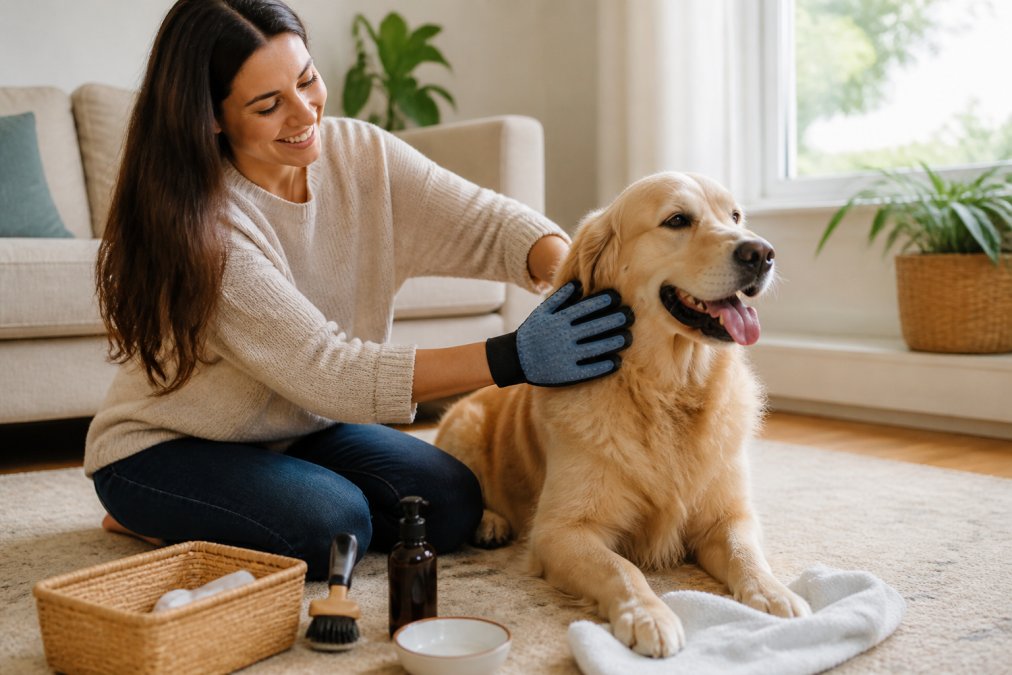
A routine that works:
- Brush the coat dry to lift loose fur and dander
- Check ears, eyes, and paws for debris
- Wet the coat and apply shampoo, working it in with a massage brush
- Rinse until the water runs clear
- Dry with a microfiber glove, then comb through
The Silicone Pet Bath & Massage Brush has a built-in shampoo dispenser, so you're not juggling a bottle with one wet hand.

For anxious pets, keep sessions under ten minutes and stop while your dog is still calm. A 2-in-1 Pet Bathing & Grooming Glove is less intimidating than a brush for nervous cats and dogs, since it feels closer to being petted than being groomed.

Professional Grooming vs. DIY: A Cost-Benefit Analysis
Most articles frame this as a simple choice: pay a groomer or do it yourself. Here's a breakdown of the costs.
6PCS Pet Grooming & Bath Kit →
What a salon visit actually costs. Full-service dog grooming in the United States typically runs $40 to $75 for a small, short-coated breed, $60 to $95 for a medium breed, and $80 to $150 or more for a large or double-coated breed. Doodles, terriers, and breeds needing a specific clip sit at the top of that range. Nail trims alone are usually $10 to $20, and a la carte deshedding treatments add $15 to $40 on top of the bath.
What DIY actually costs. A starter kit that covers bathing, brushing, deshedding, and nail care runs roughly $35 to $60 one time. Shampoo and conditioner, bought in a refillable or concentrated format, run about $10 to $25 per bottle and last most owners two to four months depending on coat and bath frequency. Consumables, replacement blades, comb teeth, microfiber towels, are a few dollars a year.
The lifetime math. Take a medium-coated dog bathed every six weeks and professionally groomed four times a year at $75 per visit. That's $300 a year, or roughly $3,600 over a 12-year life. Add two nail trims between visits at $15 each and you're closer to $3,900. The same dog groomed at home with a $50 kit and $80 a year in shampoo and consumables costs about $1,010 over the same 12 years. The gap is real, but it isn't free, it's paid for in time.
The time cost nobody mentions. A full DIY bath, dry, and brush session for a medium dog takes 45 to 90 minutes, plus cleanup. Weekly brushing adds 10 to 15 minutes per session. Over a year, that's 40 to 80 hours of hands-on time. If your time is worth $25 an hour, DIY is still cheaper, but the savings shrink fast for large, matting-prone, or anxious dogs.
Where DIY genuinely loses. Nail trimming is the clearest case. The quick, the blood vessel inside the nail, is easy to cut into, and a single bad trim can make a dog hand-shy for months. Breed-specific clipping is the second. A doodle's teddy-bear face or a schnauzer's eyebrows are learned skills, not brushwork. Anal gland expression, ear plucking for hairy-eared breeds, and dematting severe coats are all jobs where a professional's $75 visit is cheaper than a vet bill.
The hybrid that actually works. Most owners who stick with it land on a split: DIY for weekly brushing, monthly baths, and paw-pad trims; professional for full clips every 8 to 12 weeks and nail trims in between. That cuts salon spend by roughly half while keeping the parts that require training in trained hands.
A 6PCS Pet Grooming & Bath Kit at $35.99 covers the bathing, loose-hair, and dental basics in one purchase, which is roughly the cost of a single mid-range salon appointment. If you groom weekly at home, that kit pays for itself inside the first month.

How to Evaluate Organic Pet Grooming Products
Here's the uncomfortable truth most grooming guides skip: in the United States, there is no federal standard for the word "organic" on a pet shampoo bottle.
The allergy-specific angle most guides miss. If your dog has atopic dermatitis, seasonal itching, or recurrent hot spots, the ingredient that matters most isn't the one with the best story, it's the one that soothes without triggering. Colloidal oatmeal, aloe vera, and chamomile are the most commonly cited calming ingredients in veterinary dermatology literature. Tea tree oil is often recommended online but is toxic to dogs in undiluted form and should be avoided in leave-on products. Coconut-derived surfactants (coco glucoside, cocamidopropyl betaine) clean gently without stripping. If your dog's itching is seasonal or year-round rather than bath-related, the shampoo is probably not the cause, talk to your vet before cycling through products.
Conclusion
The hardest part of moving away from boutique grooming isn't finding alternatives. It's building a routine you'll actually keep. Consistency beats packaging every time.
Frequently Asked Questions
What are the best natural dog grooming products for sensitive skin?
Look for products with limited, recognizable ingredients and no synthetic fragrances, sulfates, or parabens. Hypoallergenic and pH-balanced formulas reduce the risk of skin irritation. Tools made from soft silicone or TPR are also gentler on sensitive skin than stiff metal bristles. Start with one new product at a time so you can identify what works for your dog.
How do I transition my pet to organic grooming supplies?
Make the switch gradually. Replace one product at a time, starting with shampoo, and watch for any skin reaction over the first week. If your dog has a history of allergies, introduce the new shampoo during a bath when you have time to monitor them afterward. Tools like the 6PCS Pet Grooming & Bath Kit can replace several items at once, simplifying the transition.
Are DIY organic grooming products safe for all dog breeds?
Not always. Some essential oils that are safe for humans can be toxic to dogs, and homemade recipes lack preservatives, which means bacteria can grow quickly. If you want to try DIY, stick to simple ingredients like oatmeal or plain yogurt for a one-time bath, and avoid essential oils unless a veterinarian confirms they are safe for your dog.
What ingredients should I avoid in pet grooming shampoos?
Avoid sulfates, parabens, phthalates, and synthetic fragrances. These can strip natural oils from your dog's coat and trigger skin irritation or allergic reactions. Also steer clear of artificial dyes and formaldehyde-releasing preservatives. Look for plant-based, biodegradable formulas with natural preservatives instead, and check the label for ingredient transparency.
How can I maintain my pet's coat using sustainable grooming tools?
Choose tools made from durable, pet-safe materials like silicone, TPR, or natural rubber that will last for years rather than months. Brush your dog two to three times a week to distribute natural oils and reduce shedding. Rinse tools after each use so they stay hygienic, and opt for products with minimal packaging to lower your environmental footprint.