


Table of Contents
- Why Durable Chew Toys Matter for Power Chewers
- What Makes a Chew Toy Actually Durable: Materials That Stand Up to Aggressive Chewing
- Choosing the Right Size and Intensity Level
- How to Stop Dog from Destroying Toys: Supervised Play and Smart Selection
- Signs Your Toy Needs Replacement and When to Retire It
- Interactive Play vs. Solo Entertainment Toys
- Conclusion
- Frequently Asked Questions
Last Updated: September 18, 2026
Why Durable Chew Toys Matter for Power Chewers
Power chewers can destroy a standard toy in minutes. For aggressive chewers, finding durable chew toys for power chewers isn't just about entertainment, it's about safety and preventing destructive behavior that damages your home and frustrates your pet.
Dogs with intense chewing drives face real risks. Toys that fall apart create choking hazards. Toys stuffed with cheap materials can cause intestinal blockages. Without proper outlets, power chewers turn to furniture, baseboards, and electrical cords. A dog that destroys everything needs toys built to withstand serious jaw pressure.
At Pure-N-Equal, we understand that pet owners investing in quality toys want products that actually last. This guide covers what separates toys that survive aggressive chewing from those that fail within days.
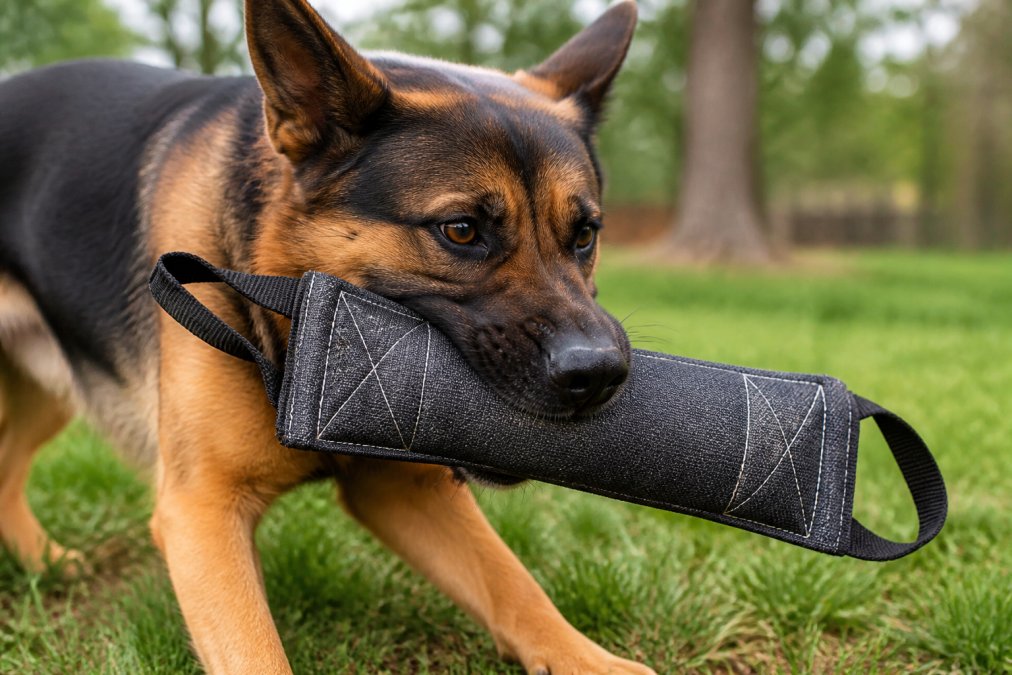
What Makes a Chew Toy Actually Durable: Materials That Stand Up to Aggressive Chewing
Real durability comes down to material science and construction quality. The best durable chew toys for power chewers combine tear-resistant fabrics with reinforced stitching and materials that resist puncture damage.
Natural Rubber and Heavy-Duty Nylon
Natural rubber offers genuine puncture resistance. When a power chewer applies 200+ PSI of bite force, natural rubber flexes rather than tears. It doesn't splinter or crack like cheaper plastics. Heavy-duty nylon provides similar benefits, it's woven tight enough to resist shredding, even under sustained grinding and biting.
The key difference: cheap nylon frays immediately. Quality nylon has a tight weave that holds together under pressure. Look for toys labeled as ballistic-grade nylon, which is the same material used in protective gear. This construction method prevents the toy from unraveling when a power chewer gets aggressive.
Ballistic Fabric and Reinforced Stitching
Ballistic fabric is military-spec material designed to withstand extreme stress. It's layered densely and woven to resist tearing. When combined with reinforced stitching, double or triple-stitched seams, the toy becomes genuinely indestructible for most power chewers.
Reinforced stitching matters more than people realize. A single-stitched seam fails when a dog pulls hard. Double stitching doubles the force required to separate seams. Triple stitching creates a safety margin that survives even the most aggressive chewers. Check product descriptions for stitch count and seam placement.
Safe Materials for Heavy Chewers: What to Avoid
Not every durable material is safe. Some toys use PVC or vinyl that contains BPA and phthalates. These chemicals leach into your dog's mouth during chewing. A toy that lasts forever but poisons your dog isn't durable, it's dangerous.
Avoid toys with:
- Loose stuffing that can be ingested
- Small parts that separate easily
- Cheap plastic that breaks into sharp fragments
- Materials not labeled as non-toxic or BPA-free
The safest durable chew toys for power chewers use TPR (thermoplastic rubber), natural rubber, or food-grade nylon.
Choosing the Right Size and Intensity Level
Size and intensity level are two separate variables that must be matched to your dog's age, mouth structure, and chewing behavior. A toy that's perfect for an adult power chewer may be dangerous for a teething puppy, and vice versa.
Matching Toy Size to Your Dog's Mouth and Breed
Size matters more than most owners realize. A toy too small creates a choking hazard. A toy too large gets ignored because the dog can't grip it properly.
Match toy size to your dog's mouth:
- Small breeds (under 20 lbs): toys 2-3 inches long
- Medium breeds (20-60 lbs): toys 4-6 inches long
- Large breeds (60+ lbs): toys 6-10 inches long
- Giant breeds (100+ lbs): toys 10+ inches long
Age-Specific Durability Needs: Puppies vs. Adult Power Chewers
Puppies and adult power chewers have fundamentally different chewing needs, and using the wrong toy for each stage can cause injury or fail to satisfy their drive.
Puppy Teething (8 weeks-6 months):
Bite-Resistant Squeaky Dog Toy →
For teething puppies, durability needs are different:
- Softer materials that relieve gum pressure: Rubber toys that can be frozen provide numbing relief. Natural rubber is ideal because it's soft enough to compress against sore gums but tough enough not to tear into pieces.
- Smaller toys they can manipulate: A 3-4 inch toy is appropriate for a puppy's smaller mouth, but it must be large enough that they can't swallow it whole.
- No small parts or loose materials: Puppies will ingest anything that separates. Avoid toys with squeakers, bells, or stuffing. Solid rubber or nylon toys are safest.
- Toys that can be sanitized: Puppies explore with their mouths and pick up bacteria. Toys should be washable and able to withstand frequent cleaning.
Adult Power Chewers (1 year and older):
For adult power chewers, durability needs shift:
- Maximum puncture and tear resistance: Materials must withstand sustained grinding, shaking, and pulling. Ballistic-grade nylon and reinforced natural rubber are essential.
- Larger toys that match their jaw size: A 6-10 inch toy gives an adult dog enough surface area to grip and work with. Larger toys also reduce choking risk because they can't fit entirely in the mouth.
- Reinforced construction throughout: Double or triple stitching, reinforced seams, and layered materials prevent the toy from unraveling under intense pressure.
- Toys designed for extended solo play: Adult power chewers benefit from toys they can work on for 30+ minutes without supervision. These need to be exceptionally durable.
Understanding Chew Intensity Ratings
Intensity level refers to how tough the toy is and what chewing style it's designed for. Most reputable manufacturers specify chew intensity on product labels:
- Light chewing: Toys for dogs that mouth or gently gnaw. These are inappropriate for power chewers.
- Moderate chewing: Toys for dogs with normal chewing drives. These will fail under aggressive chewing.
- Heavy chewing / Aggressive chewing: Toys designed for power chewers who actively try to destroy toys. These are the only appropriate choice for dogs with intense chewing drives.
- Extreme chewing: Toys for the most aggressive chewers, often made from ballistic materials or reinforced rubber compounds.
Matching Chewing Style to Toy Type
Beyond size and intensity, observe your dog's natural chewing behavior:
- Grinding chewers: Dogs that work a toy back and forth with their molars need toys with a flat or ridged surface. Nylon chews and rubber blocks work well.
- Shaking chewers: Dogs that grab and shake toys need toys with handles or grips. Reinforced tug toys and rope toys (with supervision) appeal to this style.
- Pulling chewers: Dogs that tug and pull need toys with reinforced seams and handles. Interactive tug toys satisfy this drive under supervision.
- Whole-mouth chewers: Dogs that use their entire mouth need toys with varied textures. Toys with bumps, ridges, and soft sections appeal to this style.
How to Stop Dog from Destroying Toys: Supervised Play and Smart Selection
The best way to prevent destructive behavior is supervised play combined with the right toy selection. A power chewer shouldn't have unsupervised access to toys that might fail and create choking hazards.
Supervised play protocols:
- Watch your dog for the first 10-15 minutes with any new toy
- Remove the toy immediately if pieces start separating
- Rotate toys every few days to maintain interest
- Never leave a toy unattended if it shows signs of wear
- Inspect toys daily for damage or loose seams
Signs Your Toy Needs Replacement and When to Retire It
Knowing when to retire a toy prevents injuries. A worn toy becomes a liability rather than entertainment.
Replace the toy when you notice:
- Seams separating or fraying
- Stuffing visible or leaking
- Chunks missing or pieces breaking off
- Holes or punctures that expose interior materials
- Visible wear patterns that suggest imminent failure
- The toy no longer holds together under normal chewing pressure
Interactive Play vs. Solo Entertainment Toys
Power chewers benefit from both types, but they serve different purposes.
Conclusion
Finding truly durable chew toys for power chewers means understanding materials, construction, and your dog's individual chewing style. Natural rubber, ballistic fabric, and reinforced stitching separate toys that last from toys that fail. Supervised play protocols and smart toy rotation extend the lifespan of even the toughest toys.
| Material Type | Durability Rating | Best For | Safety Considerations |
|---|---|---|---|
| Natural Rubber | Excellent | Power chewers | Non-toxic, BPA-free |
| Heavy-Duty Nylon | Excellent | Aggressive chewing | Ballistic-grade preferred |
| TPR Plastic | Very Good | Mixed chewing styles | Ensure non-toxic grade |
| Ballistic Fabric | Excellent | Extreme chewers | Reinforced stitching critical |
| Cheap Plastic | Poor | Not recommended | Choking hazard, toxins |
Frequently Asked Questions
What makes a chew toy truly indestructible for power chewers?
No toy is completely indestructible, but durable chew toys for power chewers use heavy-duty materials like natural rubber, reinforced nylon, and ballistic fabric with tear-resistant construction. Size matters too, toys sized appropriately for your dog's jaw strength last significantly longer.
How do I choose safe materials for heavy chewers?
Safe materials for heavy chewers must be non-toxic, BPA-free, and free from harmful chemicals. Natural rubber and food-grade nylon are excellent choices. Avoid toys with small parts that can break off and become choking hazards, or those with stuffing that can be ingested. Supervise play with new toys to monitor for wear and ensure your dog doesn't ingest fragments as the toy ages.
How can I stop my dog from destroying toys so quickly?
How to stop dog from destroying toys involves three strategies: select size-appropriate toys matched to your dog's chew intensity, supervise play sessions to redirect excessive aggression, and rotate toys to maintain novelty and reduce boredom-driven destruction. Toys designed for mental stimulation and enrichment reduce destructive behavior linked to separation anxiety or boredom. Replace worn toys promptly, a damaged toy encourages faster destruction as your dog targets weak points.
When should I replace a worn-out chew toy?
Retire a toy immediately if you notice tears, punctures, missing chunks, or exposed stuffing or internal materials. Small fragments are choking hazards. Even minor wear allows bacteria to accumulate in crevices. Inspect toys weekly during supervised play. Most durable toys last weeks to months depending on chew intensity; establishing a regular replacement cycle prevents accidental ingestion of worn materials and keeps your dog safe.