


Table of Contents
- Start With Your Dog's Chewing Style and Size
- Materials That Make Safe Dog Toys (and Ones to Avoid)
- Durable Chew Toys for Large Dogs: What Actually Holds Up
- How to Prevent Dog Toy Choking Hazards
- Your Dog Toy Safety Checklist
- Play by Life Stage: Puppy Teething to Senior Dental Care
- Supervised vs. Unsupervised Play and Toy Maintenance
- Frequently Asked Questions
Last Updated: September 20, 2026
Start With Your Dog's Chewing Style and Size
Learning how to choose safe dog toys starts with one question most owners skip: how does your dog actually chew? A dog that gnaws steadily for an hour needs a different toy than one that dismantles a plush duck in ninety seconds. A dog that gnaws steadily for an hour needs a different toy than one that dismantles a plush duck in ninety seconds.
Chew intensity falls into three rough bands:
- Gentle chewers mouth toys softly, rarely destroy them, and often prefer comfort over challenge
- Moderate chewers work seams and corners, gradually wearing toys down
- Power chewers bite through fabric, split rubber, and crack hard plastic
The Fingernail Rule for Toy Hardness
The fingernail rule is the fastest safety test available: press your thumbnail into the toy's surface. If it leaves no mark at all, the toy is too hard and can crack teeth. If it dents easily, it is likely too soft for a determined chewer. A slight give with resistance is the target, and it should apply to every chew toy you bring home.
Matching Toy Size to Breed and Muzzle Size
Size matters more than breed labels suggest. A toy should be large enough that your dog cannot fit the whole thing in its mouth and swallow it, but small enough to grip comfortably. Muzzle size is the practical measure: match the toy to the width of your dog's muzzle, not its weight. When in doubt, size up for aggressive chewers and size down only for small breeds with narrow jaws.
Materials That Make Safe Dog Toys (and Ones to Avoid)
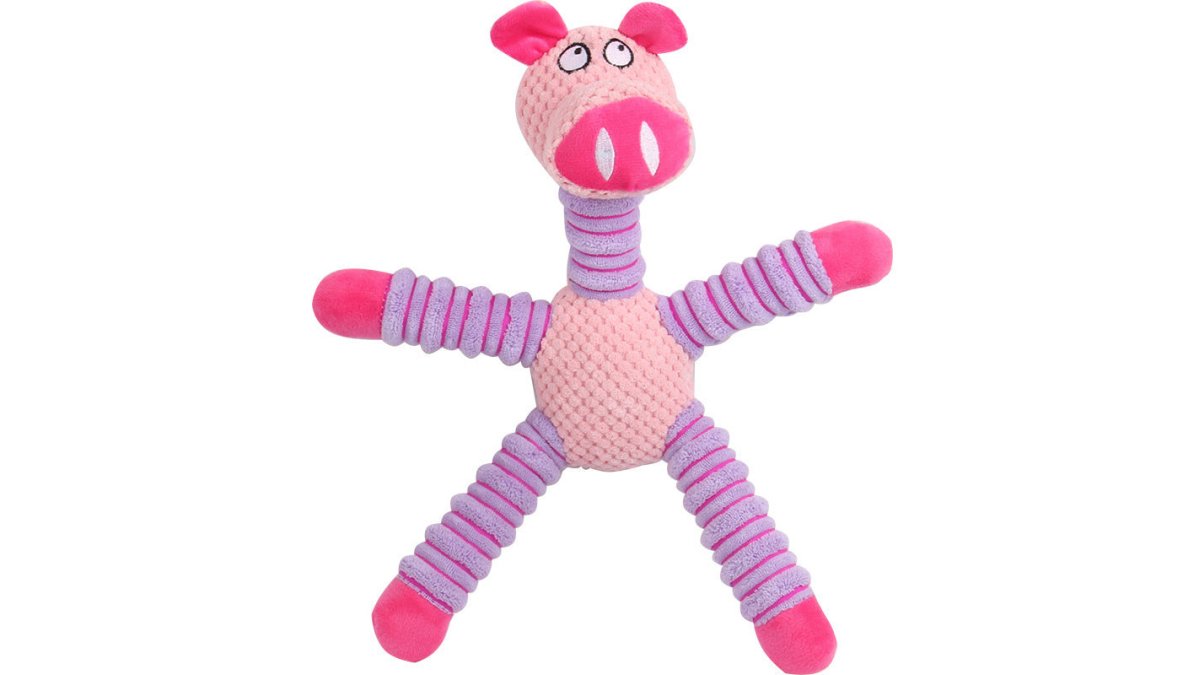
Material choice decides whether a toy lasts a week or a year. Rubber toys with some flex absorb bite force and clean well. Nylon holds up to heavy chewing but must be checked for sharp edges as it wears. Plush toys suit gentle chewers and cuddlers, though seams fail fast under pressure. Natural bone and antler options appeal to power chewers, but they are dense enough to fracture teeth in some dogs, so many veterinarians suggest softer alternatives.

Non-Toxic, BPA-Free, and What Those Labels Mean
Non-toxic means the material contains no known harmful substances at levels considered dangerous if chewed or ingested. BPA-free means the toy was made without bisphenol A, a chemical some owners prefer to avoid in anything their pet mouths daily. Neither label is a guarantee of durability, and neither replaces supervision. Treat them as a starting filter, not a finish line.
Durable Chew Toys for Large Dogs: What Actually Holds Up
Durable chew toys for large dogs share three traits: thick walls, no glued seams, and a shape that resists being pinned and torn. Solid rubber and dense nylon tend to outperform anything stitched. The honest truth is that no toy is indestructible, despite what packaging claims. Large dogs generate serious bite force, and every toy has a lifespan.
How to Prevent Dog Toy Choking Hazards
Preventing choking hazards comes down to inspection and sizing. A toy is unsafe the moment it develops a loose part, exposed squeaker, or tear you can fit a finger into. Remove it immediately, because swallowed parts can cause a gastrointestinal blockage that requires surgery.
Removable Parts, Stitching, and Swallowed Pieces
Run this check weekly:
- Tug every seam and appendage to test stitching integrity
- Squeeze the toy to confirm the squeaker is fully enclosed
- Feel for cracks, sharp edges, or hardening in rubber and nylon
- Confirm the toy is still too big to swallow whole
Ingestion risk rises sharply with toys that come apart in pieces. If your dog is a shredder, skip anything with stuffing.
Your Dog Toy Safety Checklist
Use this dog toy safety checklist before every purchase and every play session:

| Check | What to Look For | Action If It Fails |
|---|---|---|
| Hardness | Thumbnail leaves a slight dent | Too hard: skip it |
| Size | Cannot fit fully in the mouth | Too small: size up |
| Seams | Tight, no loose thread | Torn: remove the toy |
| Parts | No removable eyes or glued bits | Loose: discard immediately |
| Material | Non-toxic, BPA-free labeling | Unclear: choose another |
| Wear | No cracks or exposed squeaker | Damaged: replace it |
Play by Life Stage: Puppy Teething to Senior Dental Care
Age changes what a toy needs to do, and the wrong toy at the wrong stage causes the injuries owners most often miss. The American Veterinary Dental College notes that by age three, most dogs already show some sign of periodontal disease, so the toy you choose is doing double duty: entertainment and oral care.
Toy Rotation, Allergies, and Interactive Play Safety
Toy rotation is the most underused safety tool. Keeping three or four toys available and storing the rest, then swapping weekly, does two things: it reduces wear on any single item (so toys fail less often and less dangerously), and it prevents the boredom that drives destructive chewing. A bored dog chews harder and longer than a stimulated one. Rotation also helps with resource guarding, a dog that sees the same toy every day can become possessive, while a rotating supply keeps novelty high and guarding low.
Supervised vs. Unsupervised Play and Toy Maintenance
Supervised play means you are in the room, watching, and able to intervene within a second or two. Unsupervised play means the toy must be safe enough to leave with your dog when you walk away. The distinction is not about trust, it is about failure mode. A toy that fails under supervision is a cleanup. A toy that fails unsupervised is a veterinary emergency.
Use this rule of thumb:
- Supervised only: plush and stuffed toys, rope toys, toys with squeakers, anything with fabric seams, and any toy new to your dog
- Unsupervised OK: solid rubber chews, dense nylon (once inspected), and treat-dispensing toys with no removable parts, provided they are the correct size and in good condition
Cleaning and Maintenance Schedule
Toy maintenance is simple but easy to skip, and dirty toys harbor bacteria that cause skin and GI issues. A practical schedule:
| Toy Type | Wash Frequency | Method |
|---|---|---|
| Plush and fabric | Weekly, or after heavy drooling | Hot water, gentle detergent, air dry fully |
| Rubber and TPR | Every 1-2 weeks | Warm soapy water, rinse, towel dry |
| Nylon chews | Monthly, or when visibly soiled | Warm soapy water, scrub grooves with a brush |
| Rope toys | Weekly | Hot water, then machine wash in a mesh bag if tolerated |
| Treat-dispensing | After every use with wet treats | Warm soapy water, scrub interior, dry completely |
When to Discard or Replace
Replacement intervals depend on chew intensity, not calendar time:
- Plush toys: monthly for gentle chewers, weekly for shredders, sooner if stuffing is exposed
- Rubber chews: every 2-3 months for moderate chewers, monthly for power chewers
- Nylon chews: replace when edges become sharp or the surface develops deep grooves
- Rope toys: replace when strands begin to fray or separate
A simple habit: keep a small bin for retired toys and check it weekly. If a toy has moved from the play area to the bin, it is out of rotation for good. Pure-N-Equal stocks essentials across play, training, and grooming so owners can build a safe rotation. If you are not sure where to start, our comprehensive range supports happier, healthier routines by keeping beloved companions entertained, clean, and comfortable.
Frequently Asked Questions
What are the safest materials for dog toys?
Look for natural rubber, food-grade TPR, and tightly woven nylon, all of which resist tearing better than thin plastics. Avoid toys with BPA, phthalates, or painted finishes that can flake off. The fingernail rule helps too: if you can dent the surface with a fingernail, it is soft enough for most chewers. If it feels as hard as a rock, it can crack teeth. Safe dog toys balance give and durability, so check the label for non-toxic claims before buying.
How can I tell if a dog toy is a choking hazard?
Any part smaller than your dog's throat is a risk. Squeeze the toy and check for loose squeakers, plastic eyes, or glued-on decorations that could pop off. Tug the stitching to see if seams gap. If a toy has already lost a piece, retire it right away. Swallowed parts can cause gastrointestinal blockage, which often needs surgery. Toys sized for your dog's muzzle and build, with no removable pieces, lower the risk the most.
How often should I inspect my dog's toys for damage?
Check hard and rubber toys weekly, and plush toys after every play session. Look for split seams, exposed squeakers, cracked rubber, and missing pieces. Aggressive chewers may need daily checks. A simple replacement schedule helps: rotate plush toys out every few weeks and replace any toy with a hole bigger than a pea. Keeping a dog toy safety checklist on your fridge makes this habit easy to remember.
Are durable chew toys for large dogs safe to leave out all day?
Even the toughest toys should not be left out without supervision for strong chewers. Large dogs can break down rubber and nylon faster than smaller breeds, and fragments can be swallowed. Use durable chew toys for large dogs during supervised sessions, then put them away. Rotate in a treat-dispensing or snuffle toy for quiet time instead. This keeps chewing interesting and cuts the odds of a swallowed piece while you are not watching.
Choosing safe dog toys is a habit, not a one-time purchase. Sizes change, materials wear, and a toy that was perfect last month may be a hazard today. Pure-N-Equal makes it easier with thoughtfully selected, durable pet essentials, from bite-resistant plush toys and treat-dispensing snuffle toys to the everyday accessories that keep routines running smoothly. Choose Pure-N-Equal for reliable products built for real dogs and the people who love them.